


Less Is More: Why Low Supply Is Driving Higher Prices in Key Real Estate Markets
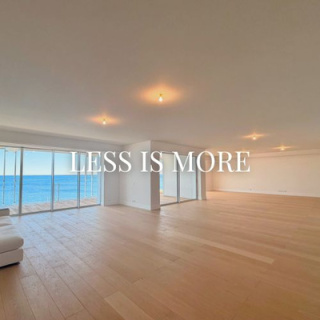
While luxury inventory is increasing in many locations, in 2025, the supply of U.S. homes priced at US$1M or more reached its highest point since 2020, according to the Sotheby’s International Realty® brand’s 2026 Luxury Outlook® report, several high-end markets are bucking the trend, with supply low and demand high.
And as anyone seasoned in the luxury residential real estate business will know, low inventory equals higher prices, along with quicker sales and, potentially, bidding wars.
So where is this happening, and why? In a press release announcing its Hottest Markets Forecast of January 8, 2026, Zillow estimated that New York City has 48% less inventory on average today compared with pre-pandemic figures in 2018 and 2019. In the same report, the city ranks among the hottest U.S. markets this year, along with low-supply Los Angeles, San Jose and Boston.
“Supply is especially limited in the US$5M to US$8M range,” says Kristi Ambrosetti, senior global real estate advisor and associate broker at Sotheby’s International Realty - East Side Manhattan Brokerage.
Luxury hotspots
In Manhattan, neighborhoods such as the West Village and the Upper West Side are especially sought after. Ambrosetti says she recently represented a buyer who faced competition for a West Village penthouse that pushed the price into the US$20M to US$25M range.
“Brooklyn is also doing very well, especially places with outdoor space and a home office,” Ambrosetti adds. “There’s just a severe lack of inventory, especially larger homes that people want today.”
Families who left the city during the pandemic are returning to New York for the schools, culture and lifestyle, Ambrosetti says.
“They want bigger apartments in the West Village or the Upper West Side, but some of them move to other areas to find a townhouse,” she says. “Developers realize that people want three or four bedrooms, so they’re starting to put deals together to build them.”
Demand for “entry-level” luxury homes in Manhattan and Brooklyn is so high, and inventory so tight, that transactions can happen extremely quickly and for high sums.
Structural barriers to higher inventory
Across the Atlantic, high-end buyers in Lisbon, Portugal, also face limited choice.
“The supply of luxury homes in Lisbon remains structurally constrained and continues to lag demand,” says Miguel Poisson, CEO of Portugal Sotheby’s International Realty.
“Compared to 2025, there has been no meaningful increase in new luxury inventory, particularly in prime locations. While buyer interest remains exceptionally strong, the pace of new listings has not accelerated at the same rate, reinforcing a clear imbalance.”
An 18.2% increase in home values in the overall Lisbon market in 2025 contrasts sharply with the more modest rise of 5.5% in 2024. The average sale price in the city has now reached approximately €5,200 (US$6,162) per sqm, according to live data from Confidencial Imobiliário, a Portuguese real estate data bank.
Poisson describes a clash between structural obstacles to development, among them planning constraints and rising construction costs, and a rising post-pandemic demand from international buyers focused on lifestyle and investment opportunities.
Lisbon’s luxury market extends into the Cascais, Estoril and Oeiras corridor outside the city, which features contemporary villas, detached homes with gardens and swimming pools, private and gated communities, and luxury sea-front apartments. The latter are particularly attractive to North American buyers.
Monaco: the ultimate example of scarcity
Few markets illustrate the relationship between limited supply and rising prices as clearly as Monaco, where the scarcity of land has defined the real estate landscape.
With a territory of just over 2 sq. km and strict planning regulations, new residential developments are rare. As a result, demand from ultra-high-net-worth individuals consistently outpaces supply, reinforcing Monaco’s position as one of the most expensive real estate markets in the world.
As Deborah Dwek, the CEO of Monte-Carlo Sotheby’s International Realty said “Monaco is a unique market, with high demand and limited supply, we work closely with other estate agent, in order to help all clients to find the right place to live within the best delay.”
Prime districts such as the Carré d’Or, Monte-Carlo and Mareterra continue to attract international buyers seeking security, tax advantages and an exceptional Mediterranean lifestyle.
New developments, including large-scale projects such as Mareterra, the Principality’s latest eco-district built on land reclaimed from the sea, are closely watched by global investors. Such as the Bay House, located in the exclusive area of the Larvotto, with 56 apartments and 5 villas, Bay House offers to its residents a prestigious lifestyle in Monaco. Yet even these rare additions to the housing stock represent only a modest increase in overall inventory.
In Monaco, where prime prices regularly exceed €50,000 per sqm, properties offering sea views, terraces or turnkey renovations often attract immediate interest. Competition among buyers remains intense, and well-located apartments can sell quickly, sometimes before they even officially reach the market.
“The average price per sqm is not really representative. From one neighborhood to another, the average price per sqm can range from €37,000 to €120,000.” Says Deborah.
Resilience amid global uncertainty
“We have a stable local economy, a real estate market that has proven highly resilient through global uncertainty, and a growing preference for high-quality, well-located assets, particularly properties with outdoor space, sea views or architectural distinction,” says Poisson.
Back in New York, Ambrosetti reports buyers “digging in” to secure a home. “That demand is supporting high prices and fast sales because there’s just not enough inventory, especially ‘good’ inventory with natural light and in turnkey condition.”
For further market insight, read and download the Sotheby’s International Realty® brand’s 2026 Luxury Outlook® report at luxuryoutlook.com.
Published the 18/03/2026
While luxury inventory is increasing in many locations, in 2025, the supply of U.S. homes priced at US$1M or more reached its highest point since 2020, according to the Sotheby’s International Realty® brand’s 2026 Luxury Outlook® report, several high-end markets are…
Read more
Located in one of the most sought-after areas of the Principality, the Japanese Garden of Monaco offers a true haven of peace in the heart of the Principality. Created in the 1990s on the initiative of Prince Rainier III, this landscaped garden is inspired by…
Read more
In-depth analysis of the Monegasque property market — In 2025, the average price per square metre in Monaco stands at around €52,000, once again confirming the Principality's unique position on the international property scene. This impressive figure places Monaco…
Read more